August 29, 2026
How Dog Food Affects Weight, Energy and Healthy Ageing
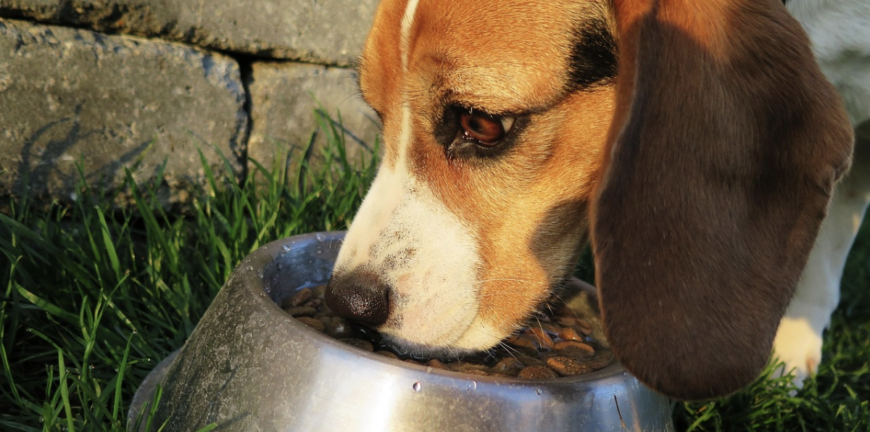
Photo: pixabay.com/photos/dog-meal-food-bowl-dog-food-feed-2210717/
There’s a moment most dog owners will recognise. The lead comes off the hook, the walk starts the way it always starts — and halfway up the hill, your dog stops. Not limping. Not distracted by a smell in the grass. Just done.
It’s easy to file that away under “getting older”. Sometimes that’s exactly what it is. Often, though, part of the story is far more ordinary: what has been going into the bowl, twice a day, for years.
Food is one of the few things in a dog’s life that touches almost everything else. Energy, joints, coat, sleep, even how well they cope with heat. It’s also the thing most of us decide once and never revisit — same brand, same scoop, from puppyhood to grey muzzle.
For some dogs that eventually means the wrong formula altogether. For plenty more, it just means too much of a rich one. Owners who start looking for a lower-calorie or weight-management food are often reacting to something that has crept up over years — and the reasons a change helps go deeper than the number on the scales.
The engine you never see
Every dog burns energy simply by existing. Heart beating, temperature holding steady, cells repairing overnight. A large part of daily energy expenditure goes towards these basic functions, while activity adds to the total.
What catches people out is that a dog’s calorie needs can change over time. Age, body composition, activity level, reproductive status and health can all affect how much energy an individual dog needs.
- Some dogs need fewer calories after desexing, so it’s worth reviewing portions and body condition rather than automatically continuing with the same amount.
- Energy needs can change as dogs get older, partly because activity and body composition can change over time.
- A wiry Kelpie and a stockier Staffy of identical weight may not need identical portions, because energy requirements vary with body composition, activity and other individual factors.
So the portion that kept your dog trim at two can quietly be too much at six. Nothing changed in the routine. The engine underneath it did.
Why extra weight isn’t just cosmetic
Fat tissue isn’t inert padding. Excess body fat is biologically active and is associated with inflammation and a range of health problems in dogs, while carrying extra weight can also place additional strain on the joints.
The clearest evidence for why leanness matters over a dog’s whole life comes from a 14-year study of 48 Labrador Retrievers, in which littermates were paired and one dog in each pair was fed 25% less than its sibling from eight weeks of age onward [4]. The leaner dogs lived a median of 1.8 years longer than their heavier littermates and showed delayed onset of several age-related diseases, including osteoarthritis [4]. It’s one breed and a modest sample, so it isn’t the last word on every dog — but it’s one of the few controlled, lifelong studies of its kind, and its direction is consistent with broader veterinary guidance on weight and joint health [1].
Energy that lasts past the first ten minutes
Two dogs can eat the same calories and behave completely differently on a walk. Some of that comes down to where the calories are coming from.
- Supplies the amino acids needed to maintain lean muscle tissue. During weight loss, preserving muscle is an important goal, so the diet needs enough protein — and other essential nutrients — even while calories are reduced [1].
- The densest fuel there is, and dogs use it well — but it’s easily overshot. Great for a working dog covering twenty kilometres, less so for a dog whose big daily event is a lap of the block.
- Ingredients such as rice, wheat and corn can provide digestible carbohydrate and energy; their presence doesn’t automatically make a food inferior. What matters more is whether the overall diet supplies appropriate calories and essential nutrients for your dog’s life stage, health and activity level [1,2].
The joints keep score
Every extra kilogram adds to the load a dog’s joints carry throughout the day — up the stairs, off the couch, into the back of the car.
The effect is proportionally larger on small dogs. On a small 8 kg dog, two extra kilograms represents 25% of body weight — a very different load to carry than the same two kilos on a 30 kg dog. Excess weight can contribute to joint problems and worsen mobility in dogs with arthritis, which is why weight management is an important part of managing many overweight dogs with joint disease.
This is where the cycle starts. Sore joints mean less enthusiasm for walks. Less walking means less muscle. Less muscle means a slower engine — and unchanged portions do the rest. The dog isn’t being lazy. They’re being sensible about pain.
For overweight dogs, successful weight loss can improve mobility and quality of life. How quickly an individual dog feels the benefit varies, particularly if arthritis or another underlying condition is already present — so progress is usually measured in months, not weeks.
It shows up on holidays, too. A heavier dog tires faster on a beach walk, labours crossing a hot car park, and gives up halfway along the coastal track everyone else is still enjoying.
That matters if your trips are built around your dog. Half the point of tracking down pet-friendly places to stay is doing things together once you get there — and a dog in good nick gets far more out of the weekend than one who sleeps through it on the cabin floor.
The signs that don’t look like diet problems
Weight is the obvious flag. A few other signs are worth knowing, though none of them are diagnostic on their own.
- Dull or flaky coat. Can reflect gaps in fatty acids, zinc or protein — though skin has plenty of other causes, so it’s worth a vet’s opinion rather than a guess at the pet shop.
Changes in sleep, appetite, stool quality or energy can have many causes. If a change persists, don’t assume the food is responsible — have your dog assessed by a veterinarian.
Is your dog actually carrying too much?
Forget the scales for a moment — breeds vary too much for a number alone to tell you anything. Vets use a body condition score instead: a nine-point scale where four or five is the sweet spot. A higher score indicates more body fat, but the relationship between body condition score and excess body weight is only approximate. Your vet can use the score alongside your dog’s weight and muscle condition to set an appropriate target.
You can get a rough read at home in about thirty seconds.
- Run your palms flat along them. You should feel them under a thin covering without pressing — a bit like the knuckles on the back of your hand.
- From above. There should be a visible narrowing behind the ribs. No waist means there’s work to do.
- From the side. The belly should tuck upward, not run parallel to the ground.
Do it monthly and take a photo. Weight creeps on too slowly to spot day to day, and a photo from today beats your memory of it in six months. Your vet can score them properly and tell you whether you’re reading it right.
Body condition score measures fat, not muscle — and the two don’t always move together. A dog can be carrying excess fat and losing muscle at the same time, which becomes more common with age. Vets increasingly check a separate muscle condition score alongside BCS, assessing areas such as the spine, shoulder blades and thighs [3]. If your dog’s spine or shoulder blades feel more prominent even though their weight hasn’t dropped, it’s worth mentioning at their next check-up — it can point to muscle loss that a weight-focused view alone would miss.
The unglamorous mechanics
- Weigh, don’t scoop. A heaped scoop holds considerably more than a level one, and kitchen scales cost very little.
- Keep treats and other extras to around 10% or less of daily calories. Training rewards, dental chews, the crust of toast and the last spoon off the dinner plate all count.
- Check who else is feeding them. Two people each giving “just a little” is a surprisingly common explanation for a mystery gain.
- Treat the bag’s feeding guide as a starting point. It’s an average across a lot of dogs, not a reading of yours.
Choosing a food that helps
If your dog needs to lose weight, the instinct is to serve less of the same food. That works up to a point — then it starts stripping out protein and nutrients along with the calories, which costs muscle exactly when you want to keep it. For some dogs, a veterinary weight-management diet can make calorie restriction easier while helping maintain adequate protein and other essential nutrients. The right approach depends on the individual dog.
What to look for, beyond the ingredient list:
- Confirmation the food is complete and balanced for your dog’s current life stage.
- Enough information from the manufacturer to answer a specific nutrition question — including contact details, not just a marketing line.
- Calorie density (kcal per cup or per 100 g), so you can calculate portions rather than guess.
- Suitability for your dog’s health status — coat condition, joint health, any diagnosed condition.
- Evidence the manufacturer employs a qualified nutritionist or formulator and runs quality control on ingredients and finished products.
- Whether your dog’s body condition and muscle condition stay appropriate once you’re feeding it.
Ingredient lists alone are a weaker guide than they look — a “named meat first” or “short list” doesn’t reliably tell you about nutritional quality [1,2]. No single brand suits every dog. If yours has something diagnosed — pancreatitis, kidney disease, diabetes, dodgy joints — that call belongs with your vet, not a label.
Whatever you land on, switch gradually. About a week of shifting the ratio from old to new gives the gut time to catch up, and avoids the upset that makes people abandon a good change too early.
Play the long game
Safe weight loss in dogs is slow. A common veterinary target is roughly 0.5–2% of body weight per week, with the appropriate rate depending on the individual dog and their starting condition — closer to 0.5% for dogs that are very overweight [2,5,6,7,8,9]. On a twenty-kilo dog in the middle of that range, that’s a couple of hundred grams a week. It feels like nothing.
Over six months, it isn’t. And unlike a training breakthrough or a new toy, this one compounds quietly in the background: better sleep, easier mornings, more years of your dog making it to the top of the hill with you.
The short version
- Your dog’s energy needs drop after desexing and again with age — the portion should move with them.
- Staying lean is one of the strongest levers you have on comfort and healthy ageing.
- Use a body condition score, and ask your vet about muscle condition too — ribs, waist from above, tuck from the side.
- Weigh meals, count treats, and treat the bag’s guide as a starting point.
- Aim for roughly 0.5–2% of body weight a week (closer to 0.5% for very overweight dogs), and switch foods over about a week.
One last thing. If your dog has an existing condition, or the weight won’t budge despite honest portions, have a chat with your vet before changing much. Underlying medical problems can sometimes contribute to weight gain or make weight loss difficult, so persistent unexplained weight change is worth discussing with your vet. Weight dropping off on its own is also worth a veterinary check.
Sources and further reading
- WSAVA Global Nutrition Guidelines. https://wsava.org/global-guidelines/global-nutrition-guidelines/
- WSAVA Global Nutrition Toolkit — “Selecting a Pet Food.” https://wsava.org/wp-content/uploads/2021/04/Selecting-a-pet-food-for-your-pet-updated-2021_WSAVA-Global-Nutrition-Toolkit.pdf
- WSAVA Muscle Condition Score Chart for Dogs. https://wsava.org/wp-content/uploads/2020/01/Muscle-Condition-Score-Chart-for-Dogs.pdf
- Kealy RD, Lawler DF, Ballam JM, et al. Effects of diet restriction on life span and age-related changes in dogs. J Am Vet Med Assoc. 2002;220(9):1315–1320. https://pubmed.ncbi.nlm.nih.gov/11991408/
- VCA Animal Hospitals. Creating a Weight Reduction Plan for Dogs. https://vcahospitals.com/know-your-pet/creating-a-weight-reduction-plan-for-dogs
- VCA Animal Hospitals. Tips for Successful Weight Loss in Dogs and Cats. https://vcahospitals.com/know-your-pet/tips-for-successful-weight-loss-in-dogs-and-cats
- Cornell University Riney Canine Health Center. Obesity and Weight Loss in Dogs. https://www.vet.cornell.edu/departments-centers-and-institutes/riney-canine-health-center/canine-health-topics/obesity-and-weight-loss-dogs
- UC Davis School of Veterinary Medicine. Nutritional Management of Weight. https://healthtopics.vetmed.ucdavis.edu/health-topics/canine/nutritional-management-weight
- Veterinary Partner (VIN). Weight Loss in Dogs. https://veterinarypartner.vin.com/default.aspx?pid=19239&catId=102898&id=10390516&ind=443&objTypeID=1007
Written by: Karolis Butkus
Last reviewed: August 2026
Evidence checked: August 2026
Disclaimer: This article is for general educational purposes and isn’t a substitute for individual veterinary advice. Calorie requirements and weight-loss plans vary between dogs.